What Is Steak Doneness?
Steak doneness refers to the degree to which a steak has been cooked, measured primarily by its internal temperature. As heat penetrates the meat, muscle proteins denature, moisture is released, and the color of the center shifts from deep red to pink to fully brown. Each stage produces a completely different texture, juiciness, and flavor profile.
The most reliable way to measure steak doneness is with an instant-read meat thermometer inserted horizontally through the side of the steak into the thickest part, avoiding fat and bone. According to the USDA Food Safety and Inspection Service, the minimum safe internal temperature for whole beef cuts is 145°F (63°C), followed by a three-minute rest.
However, most steak enthusiasts cook below that threshold — and for whole muscle cuts, that is generally considered safe by food scientists, as surface pathogens are destroyed during searing.
Why Steak Doneness Became So Important
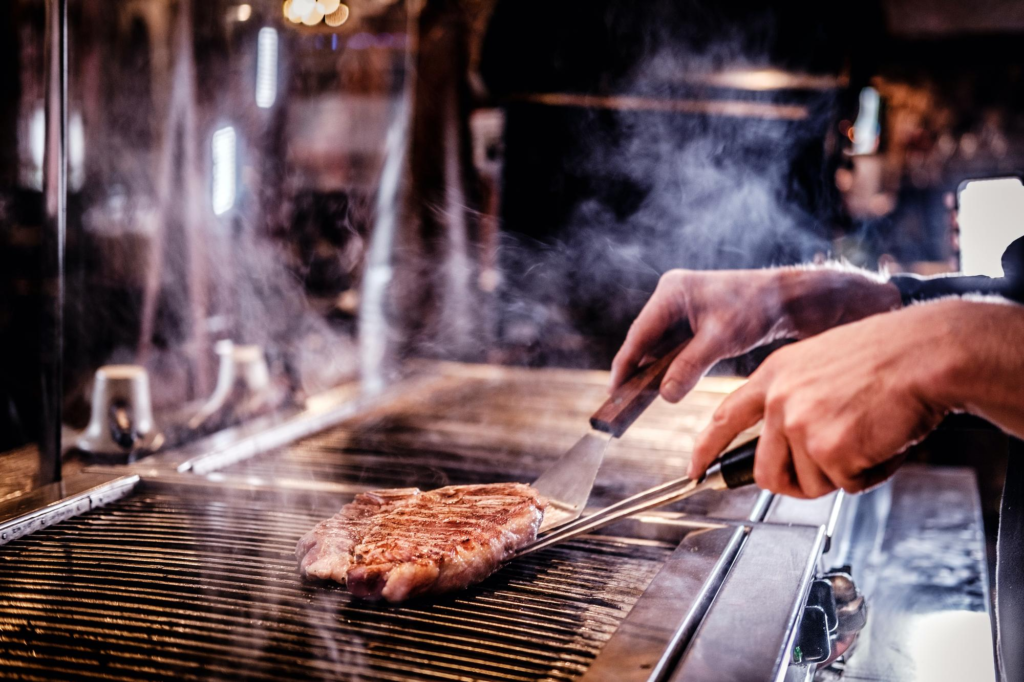
The obsession with getting steak doneness right exploded as premium beef cuts became more widely available to home cooks. A $40 ribeye cooked to well done instead of medium rare is, frankly, a waste of money. Fat rendering, juiciness, and tenderness are all temperature-dependent reactions.
What most articles still get wrong in 2026 is the pull temperature versus target temperature gap. Carryover cooking — the continued rise in internal temperature after a steak is removed from heat — can add anywhere from 3°F to 10°F depending on the thickness and resting environment. This means if you want a final temperature of 135°F (medium rare), you must pull the steak off heat at around 125°F–130°F.
This is the single most common mistake that causes overcooked steaks, and most doneness guides still bury this fact at the bottom of the page, if they mention it at all.
Complete Steak Doneness Temperature Chart 2026
Below is the full guide covering every level, including the correct pull temperature so carryover cooking lands you exactly where you want to be.
Blue Rare
- Pull at: 110°F (43°C)
- Final temperature: 115°F (46°C)
- Center: Almost entirely red, cool to warm — barely cooked through the exterior
- Texture: Extremely soft, almost raw
- Best for: Very fresh, high-quality beef; not for everyone
Rare
- Pull at: 115°F–120°F (46°C–49°C)
- Final temperature: 120°F–125°F (49°C–52°C)
- Center: Bright red, warm throughout
- Texture: Very tender and juicy, soft to the press
- Best for: Lean cuts like filet mignon, tenderloin
Medium Rare
- Pull at: 125°F–130°F (52°C–54°C)
- Final temperature: 130°F–135°F (54°C–57°C)
- Center: Warm red center with a consistent pink edge to edge
- Texture: Peak tenderness — juices run freely when cut
- Best for: Ribeye, New York strip, T-bone — the near-universal recommendation among chefs
Medium
- Pull at: 135°F–140°F (57°C–60°C)
- Final temperature: 140°F–145°F (60°C–63°C)
- Center: Warm pink center, less red
- Texture: Slightly firmer, still juicy but noticeably less so than medium rare
- Best for: Cooks who want some pink without any red
Medium Well
- Pull at: 145°F (63°C)
- Final temperature: 150°F (66°C)
- Center: Mostly brown with a faint blush of pink
- Texture: Firm, significantly drier — fat rendering is nearly complete
- Best for: Those transitioning away from well done
Well Done
- Pull at: 155°F+ (68°C+)
- Final temperature: 160°F+ (71°C+)
- Center: Fully brown, no pink
- Texture: Firm and dry — moisture has been pushed out during extended cooking
- Best for: Personal preference — nothing wrong with it, but choose a cheaper cut
Also Read: [Best Cut of Steak — Buying Guide for Every Budget](internal link)
What Still Works Reliably for Checking Steak Doneness in 2026
The instant-read thermometer remains the gold standard. After testing both the probe method and the hand/poke method extensively, there is no comparison. A quality digital thermometer like the ThermoWorks Thermapen gives a reading in under two seconds and eliminates all guesswork.
The correct insertion technique matters:
- Insert horizontally through the side of the steak, not from the top
- Push the probe tip into the center of the thickest part
- Avoid touching bone or large fat pockets — both give false readings
- For steaks thinner than 1 inch, angle slightly to get into the true center
The beef temperature guide from Beef. It’s What’s For Dinner confirms this horizontal insertion method as the most accurate approach for steaks.
The hand/poke test (comparing the steak’s firmness to the fleshy pad at the base of your thumb) can work as a rough backup — but only after years of practice. It varies by cut thickness, fat content, and even how cold your hands are. For home cooks shooting for precision, rely on the thermometer.
What No Longer Works Common Doneness Myths Debunked
Color of juices: The old trick of “if the juices run clear, it’s done” was never reliable for steak. Juice color depends on myoglobin concentration, not safety or doneness.
Pressing with your finger only: Without extensive experience, this method leads to overcooking more often than not. Use it alongside a thermometer, not instead of one.
Cooking time charts without temperature verification: Every steak is different. A 1-inch ribeye from a cold refrigerator will cook very differently from one that has rested at room temperature for 30 minutes. Time-only charts are a starting point at best.
Cutting into the steak to check color: This releases juices and defeats part of the purpose of resting. It’s also an unreliable indicator because the center oxidizes and changes color on contact with air within seconds of cutting.
Is Steak Doneness Below 145°F Safe to Eat?
This is the question most guides refuse to answer directly — so here it is plainly.
For whole muscle cuts (ribeye, strip, tenderloin, sirloin), cooking to rare or medium rare is widely accepted as safe for healthy adults. The reason: pathogens like Salmonella and E. coli live on the surface of beef, not in the interior. A proper sear at high heat destroys surface bacteria even if the center stays at 125°F.
The risk increases with:
- Ground beef (pathogens are distributed throughout) — always cook to 160°F
- Mechanically tenderized steaks (needled or blade-tenderized) — these can introduce surface bacteria deep into the meat; cook these to 160°F as well
- Immunocompromised individuals, pregnant women, young children, or the elderly — follow USDA guidelines strictly and cook to 145°F minimum
The FDA’s food safety resource on cooking temperatures is worth bookmarking for reference, particularly if cooking for vulnerable groups.
Also Read: [How to Cook Steak in the Oven — Step by Step Guide](internal link)
Steak Doneness vs. Cut: Which Level Works Best for Which Steak
| Cut | Recommended Doneness | Why |
|---|---|---|
| Filet Mignon | Rare to Medium Rare | Very lean — dries out fast above 135°F |
| Ribeye | Medium Rare to Medium | High marbling renders beautifully at 130°F–140°F |
| New York Strip | Medium Rare | Balances tenderness and fat flavor |
| T-Bone / Porterhouse | Medium Rare | Two muscles cook at different rates — medium rare centers out the average |
| Sirloin | Medium | Less marbling means slightly higher temp improves texture |
| Flank / Skirt | Medium Rare | These cut against the grain — overcooking makes them very tough |
| Hanger Steak | Medium Rare | Similar to flank — very sensitive to overcooking |
| Well-Marbled Wagyu | Rare to Medium Rare | Extreme fat content means it can self-baste; going above 130°F wastes the marbling |
FAQs
What is the best steak doneness level?
Medium rare (130°F–135°F) is the most widely recommended level among professional chefs and steak experts. It produces the best combination of tenderness, juiciness, and beefy flavor. Fat renders properly at this temperature, and the muscle fibers are cooked just enough to be tender without squeezing out moisture.
How much does steak temperature rise after resting?
Carryover cooking typically adds 3°F–10°F to the internal temperature after the steak is pulled from heat. A thicker steak resting on a cutting board retains more residual heat and will rise higher. Always pull the steak 5°F–10°F below your target doneness temperature and rest it for at least 5 minutes (10 minutes for thick cuts over 1.5 inches).
Can I check steak doneness without a thermometer?
The hand poke test is the most popular alternative: compare the steak’s resistance to the firmness of the fleshy pad at the base of your thumb while touching each finger. Open hand (no touch) = raw; thumb to index = rare; thumb to middle = medium rare; thumb to ring = medium; thumb to pinky = well done. It works as a rough guide but is far less accurate than a thermometer, especially for beginners.
What temperature is medium rare steak?
Medium rare steak has a final internal temperature of 130°F–135°F (54°C–57°C). You should pull the steak off heat at 125°F–130°F to account for carryover cooking during the rest period.
Is well done steak bad?
Well done steak is not objectively bad — it is simply a matter of personal preference. However, cooking steak to 160°F+ does remove most of the moisture and renders out fat that would otherwise add flavor and richness. If you prefer well done, choose cuts with more connective tissue (chuck, brisket) that actually benefit from longer cooking, or add a sauce or compound butter to compensate for the dryness.
Why does my steak look the right color but taste overcooked?
Surface color is not a reliable guide to doneness. The Maillard reaction that creates browning on the outside happens at temperatures far higher than what determines interior doneness. A steak can have a dark, beautiful crust while the center is still raw — or look slightly grey on the outside while being perfectly medium rare inside. Always verify with a thermometer.
Final Thoughts
Steak doneness in 2026 comes down to one non-negotiable principle: use an instant-read thermometer, pull 5°F–10°F before your target, and rest the steak properly. Everything else — the hand tests, the timing charts, the color checks — are approximations that will occasionally fail you on an expensive cut.
The temperature chart in this guide is built around real carryover cooking data. Medium rare means pulling at 125°F–130°F, not 130°F–135°F. That single adjustment, combined with a 5–10 minute rest on a wire rack (not a cutting board, which insulates the bottom), is what separates a great steak from a good one. Know your cut, set your target, hit the pull temperature, and rest it. That is the complete formula.
Also Read:
Publisher